Two kinds of connectors are quite common when handling electrical wiring: crimp and IDC connectors. Though they do it in rather different ways, and each has advantages depending on the work, they both fasten wires.
Let's examine where each is most suited, what distinguishes each, and how to choose the appropriate kind for your project.
Anyway,If you're looking for a reliable platform to buy electronic components, visit Chipmall.com – an online platform offering low-priced, genuine components with peace of mind.
What Is an IDC Connector?

IDC stands for Insulation Displacement Connector. The key feature of IDC connectors is that they connect to a wire without stripping the insulation first.
How IDC connectors work
An IDC has inside sharp metal blades. The blades of the wire pressed into the connector cut through the insulation and come into touch with the conductor inside. Not soldering, not twisting, not crimping. It is a rapid, repeatable process.
This form makes IDC connectors perfect for mass wiring chores, mainly when working with flat, multiple wires in parallel ribbon cables.
Where do IDC connectors find applications?
Computer internals (older hard drives, motherboards)
telecommunications systems
Control mats
Understanding IDC Ribbon Cable Connectors

Not every IDC connector is precisely like another. While they all work on the same basic principle—making contact by slicing through wire insulation—there are many varieties, each designed for certain wire forms and uses.
Types of IDC Connectors
IDC wire-to-board connectors directly link a wire or cable to a PCB or printed circuit board.
IDC socket connectors can plug into board header pins when used in concert with ribbon cables.
IDC plug connectors: Typically mate with socket connectors, forming a complete cable assembly.
Common in telecom wiring, through-wire IDC connectors let one tap into an existing wire run without cutting it.
Why Are IDC Ribbon Connectors Different?
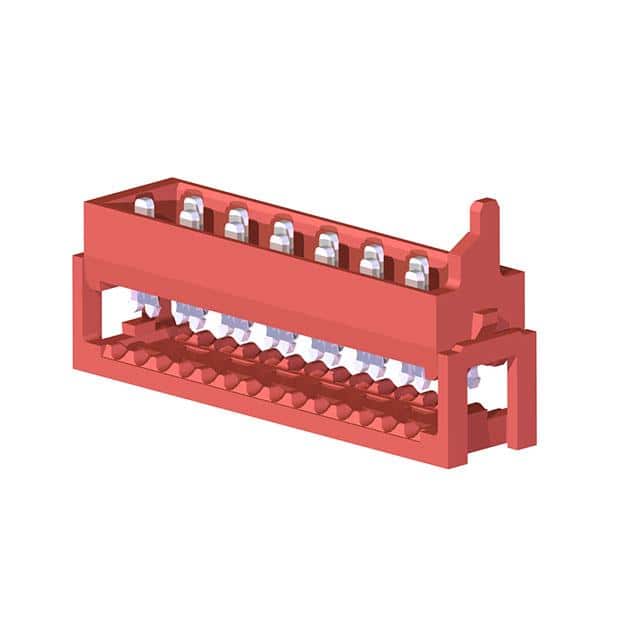
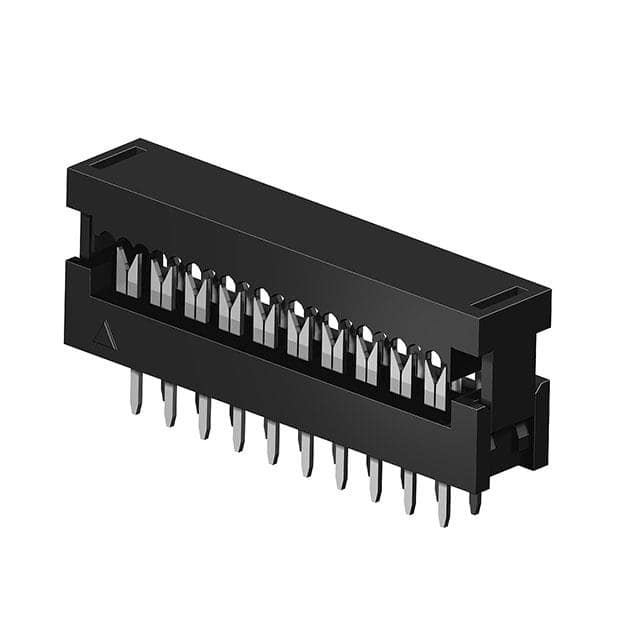
IDC ribbon cable connectors are specialized IDC connectors designed especially for flat ribbon cables with several parallel conductors.
They differ in the following:
Usually, with one push, they can cut several wires at once.
The contact blades line up to match the conductors' spacing—pitch—of the ribbon cable.
Often combined with a strain relief or locking clip to keep the cable in place.
IDC ribbon cable connectors are ideal when you must wire 10, 20, or even 40+ connections simultaneously, like in computer internals, printers, or control panels; general IDC connectors terminate just one or two wires.
So, while all ribbon cable connectors are IDC, not all IDC connectors are for ribbon cables. Choosing the proper one relies on your wire type, application, and the amount of connections you're making.
What Is a Crimp Connector?

Crimp connectors require another strategy. You remove the insulation from the wire, slide it into the connector, and compress the metal around the wire with a crimping tool. The effect is a tight, conductive connection.
Crimping takes more time per wire than IDC, but it offers a stronger mechanical connection and is better suited for individual wire terminations.
Common types of crimp connectors
Ring terminals (used for screw or stud connections)
Spade terminals for fast connections
Butt connections (to attach two wires end-to-end)
Standard connectors for crimp connections are:
- Vehicle wiring.
- Industrial machines.
- Power distribution systems.
- Home electrical tasks.
Side by- Side Comparison between IDC Connector and Crimp Connector
| Feature | IDC Connector | Crimp Connector |
| Wire prep | No stripping needed | Strip insulation first |
| Tooling | IDC press or vise | Crimping tool |
| Best for | Ribbon cables, multi-wire | Single wires, heavier gauge |
| Connection | Fast, consistent | Strong, durable |
| Reusability | Not reusable | Some can be reused |
| Cost (tooling) | Higher upfront for IDC tools | Lower-cost tools |
Which One Makes More Sense for You?
If you're working on a project requiring numerous parallel wires, like a ribbon cable or electrical wiring, IDC connections will save you time and assure uniformity. They are perfect for rapid assembly in controlled settings when speed counts more than longevity.
Conversely, if you are working with individual wires—particularly in areas where mechanical stress, temperature fluctuations, or vibration could arise—as in automotive wiring or industrial control panels—crimp connectors are the better option. They create a stronger, more robust physical bond and are more adaptable to wire types and gauges.
In short:
- When you need quick, orderly mass connections, use IDC.
- Use crimp connectors when you require durability and flexibility.
Think about your wiring scenario, tools, and whether you need to disconnect or redo anything later. That background will guide you to choose the connector best for your application.
Six Tips for Selecting the Correct Connector
Match the connection to the wire type.
Not every connector plugs every wire. IDC connectors are made for solid-core wires or flat ribbon cables where the insulation can be pierced cleanly. If you are handling stranded wire, use crimp connections; they offer a more stable hold and better grip on the individual threads.
Think about the surroundings.
Where's this connector going to live? Inside a quiet office machine, a control box in an automobile engine, or both? Crimp connectors are usually more rugged and better for high-vibration or high-heat areas. IDC connectors are great for protected environments like internal electronics.
Think about the number of wires you are connecting.
Especially in parallel, IDC connectors—especially ribbon cable types—can save tons of time if you wire many cables simultaneously. One press connects 10+ wires in one go. Conversely, crimp connectors are better for bespoke, one-off connections.
Make use of appropriate instruments.
Yes, it's tempting to use whatever pliers you have lying around, but a professional crimping tool or IDC press makes a tremendous difference. A good connection isn't just about getting things done—it's about making sure they don't fail later.
Find out whether you must redo it or disconnect it.
Most IDC connectors are not intended for repeated use. Once one presses in a wire, that is it. Especially if you are using terminals or housings, crimp connectors are more forgiving—you can usually remove or replace them without damaging the wire.
Check the wire gauge compatibility always.
Using a connector that's too big or too small for your wire is a recipe for failure. Examine the parameters to be sure the connector corresponds with the AWG (American Wire Gauge) of the wire you are running. Too tight could harm the wire; too loose the connection won't hold.
Common Mistakes to Avoid and the Right Ways to Do It
selecting a connection unsuitable for the task.Many beginners try to force an IDC connector onto the wrong type of wire—usually stranded. That leads to weak connections and frustration.
What to do instead: Use IDC connectors only for solid-core or ribbon cable. If you're dealing with stranded wire, go with a crimp-style terminal—it’s designed for it.
Using makeshift tools to crimp or press.Trying to use pliers or a vise instead of a real crimp tool or IDC press usually ends badly. You might think the connection is fine—until it fails under load.
What to do instead: Invest in the right tool, even if it’s a budget version. A proper crimping tool applies even pressure and gives you a clean, solid bond.
Reusing a connector that’s not designed for it.It’s tempting to pull a wire out of an IDC and reuse it. The problem is, IDC blades deform once they’ve pierced the insulation—they won’t grip the same way again.
What to do instead: Treat IDC connectors as one-time-use. If you’re going to rewire or change things later, use connectors designed for rework—like screw terminals or reusable crimp housings.
Final Thoughts
The choice between IDC and crimp connectors isn’t about which is “better”—it’s about what fits your job. IDC connectors are fast and efficient for ribbon cables and high-volume applications. Crimp connectors give you flexibility, strength, and reliability for individual wires.
If you're building or repairing electronics, understanding these two types—and knowing when to use each—will make your work cleaner, safer, and more professional.