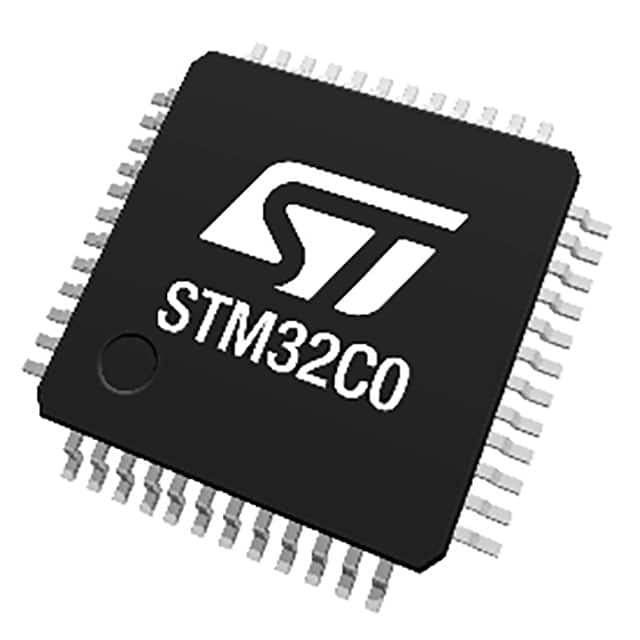
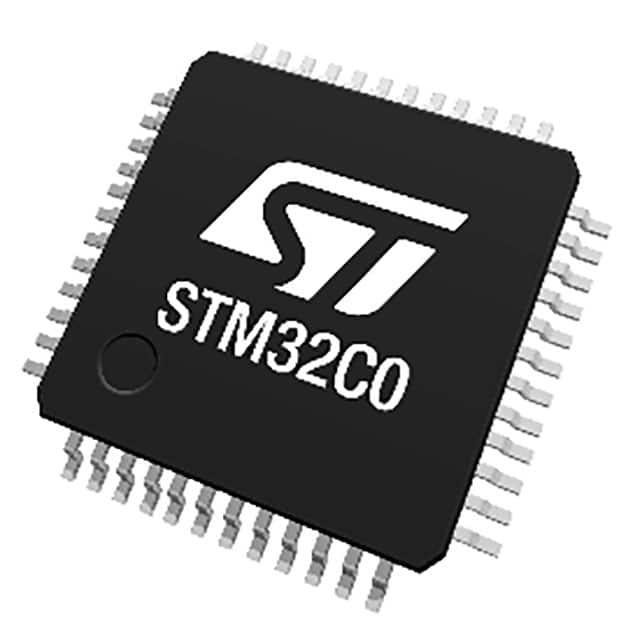
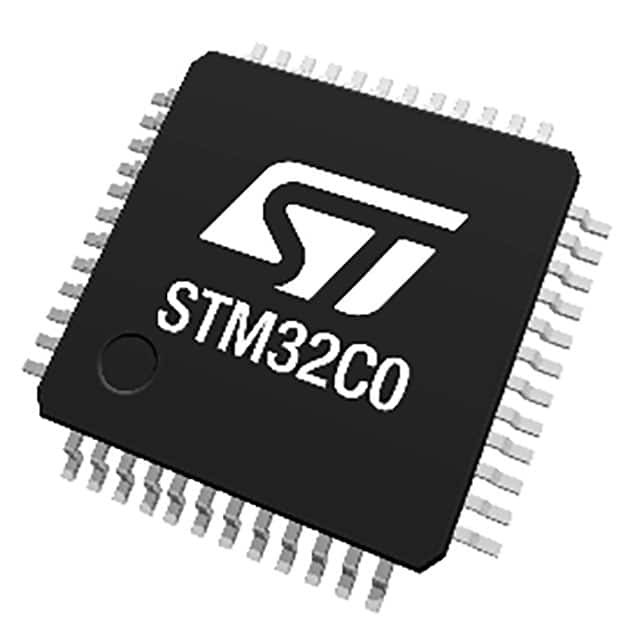
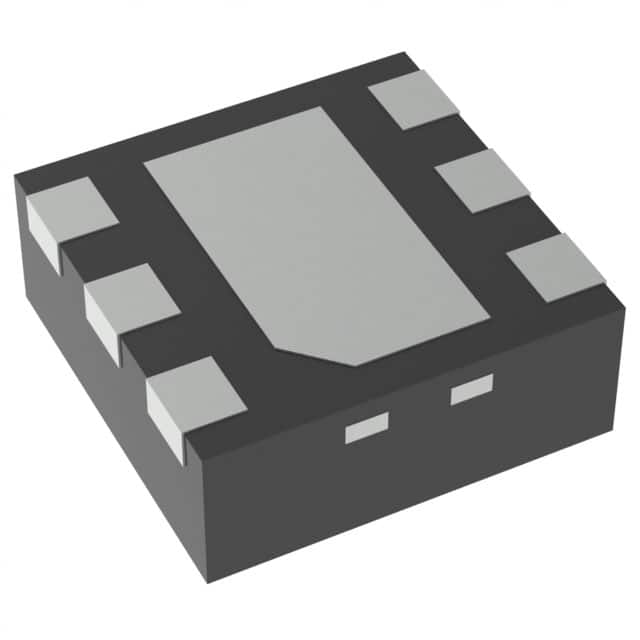
When discussing microcontrollers, two names often come up: STM32 and ESP32. Both models are competent and widely popular, yet each was designed for specific tasks. When asked which to use for something new they build, instead of asking which to pick, it's better to ask, "Which one should I choose?" Consider, "What project am I constructing?"
In this post, we'll outline why STM32 may be superior to ESP32 in certain situations where performance, power, and stability are significant.
STM32 vs. ESP32: What Microcontroller is Best for My Project?
At first glance, the ESP32 seems like an obvious choice: its price makes it highly accessible, and its built-in Wi-Fi and Bluetooth are perfect for many IoT projects. But STM32's key advantage lies elsewhere—reliability, control, and precision come into play here.
Let's quickly compare them:
| Feature | STM32 | ESP32 |
| Real-time performance | Strong | Decent |
| Power efficiency | Excellent (STM32L series) | Moderate |
| Peripheral support | Extensive | Limited |
| Connectivity | External modules needed | Built-in Wi-Fi/BLE |
| Industrial-grade use | Yes | Not ideal |
| Long-term availability | 10+ years | Less predictable |
So what does this mean?
ESP32 is ideal for connected devices and quick prototyping when convenience and cost are primary considerations. When precision timing, long-term stability or reduced power draw are desired, STM32 comes into its own.
STM32 gives more control, which in embedded systems is often what separates an impressive demo from an effective product.
As such, in the following sections, we will highlight why STM32 may be the better choice for severe and performance-critical applications.
Why STM32 Microcontrollers Make Sense in Demanding Applications

STM32 Microcontrollers
Not every device can be easily transformed into something as basic as a smart lightbulb or hobby sensor; some require tough conditions and long hours without interruption, which is where STM32 microcontrollers excel.
STM32 is often the better option when reliability trumps convenience:
It Is Timing and Precision Expertise
Many applications require fast, predictable responses -- like motor control, signal processing or medical devices -- which STM32 chips excel at doing.
They support real-time operating systems, respond quickly to inputs, and allow for microsecond control over how the chip handles itself. You don't need to be an expert at programming firmware—the platform provides this control by design.
STM32 Components Are Optimized for Low-Power Operation
If your device requires regular battery use and must last months or years without charging, STM32's ultra-low-power STM32L series could be ideal.
Sleep modes, smart wake-up options, and ways of keeping sensors or timers running without draining the whole system are just a few features of the ESP32's power-saving abilities. Even without Wi-Fi included in its capabilities, it saves power well enough.
They Can Survive Harsh Environments
Many STM32 microcontrollers are used in harsh environments, such as factories, cars, and outdoor systems, where temperature changes, vibration, and interference are typical.
These chips have been tested to withstand extreme pressure; the ESP32, on the other hand, is more tailored towards consumer products rather than heavy-duty equipment.
If your product needs to function nonstop in real life without requiring reboots or periodic power cycles -- STM32 may be your go-to choice.
Increased Options for Hardware Integration
STM32 chips come in various flavours to meet various hardware integration requirements, with options including built-in CAN and multiple ADCs/DACs/PWM channels/timers, depending on what best suits your design requirements.
So:
This offers greater flexibility: you don't need to redesign your system to fit a microcontroller—instead, you select an STM32 that best meets your requirements.
STM32 is ideal if your project needs precision, efficiency, reliability or longevity. While not the fastest to get up and running - and won't connect wirelessly out-of-the-box - STM32 provides everything necessary for creating solid long-term embedded systems.
Where ESP32 Wins: When to Choose It Instead
Let's be clear—ESP32 is an exceptional microcontroller, and for many modern projects, it may be the ideal choice. Packed into such a small package is plenty of functionality that developers will appreciate having in their toolbox.
Here is where the ESP32 shines:
Wi-Fi and Bluetooth Built Right In
One of ESP32's hallmark features is connectivity: Wi-Fi and Bluetooth are built right into its core chip, no extra modules necessary, nor complex wiring required - enabling you to build connected devices out of the box!
Do you want to send sensor data or control devices with Your Phone, Stream Audio, or update firmware over the air with an ESP32? ESP32 makes all this possible with just a few lines of Code!
Fast Development and an Expanding Community
Starting development on an ESP32 is straightforward, as its Arduino core for ESP32 is fully-featured and intuitive; anyone familiar with Arduino can jump straight in.
Should you encounter difficulties, there's always someone available to help—from guides, libraries, forums, GitHub examples, and YouTube tutorials—so no one is left stranded alone!
This makes ESP32 ideal for:
- Prototyping new ideas
- Learning embedded development
- Building quick demos or MVPs
Enough Power for Multiple Applications
ESP32's dual-core processor, ample memory, and ability to manage multiple tasks simultaneously make it ideal for use in many different applications. Furthermore, this board supports FreeRTOS, multitasking, and hardware timers, which are features that make it particularly robust and suitable for many different types of tasks.
Your smart home or IoT device should have enough power to run a web server, read sensors, and control outputs simultaneously, providing plenty of computing capacity.
Budget-Friendly and Easy to Find
Price matters and ESP32 boards are budget-friendly and easy to source—online, at maker shops, or as kits. No special sourcing or minimum orders are necessary!
If you're building a consumer product or exploring an idea, keeping costs to a minimum and options open keeps costs at bay and unblocked opportunities.
So, When Should You Select an ESP32?
When Your Project Requires Wi-Fi or Bluetooth; Fast Prototyping, Low Cost, and Rapid Results and an active development ecosystem.
Are you considering an ESP32 as your next aircraft purchase? If so, this model could be ideal.
Although not intended to support harsh environments or power-sensitive systems, the NX-P605 is well-suited to power a range of modern connected devices, making it the perfect companion.
STM32 Vs ESP32: Comparison of Specifications
Are You Deciding Between STM32 and ESP32? Here Is A Quick Guide
| Category | STM32 Series | ESP32 Series |
| Processor | ARM Cortex-M cores (M0/M3/M4/M7 etc.), single-core, clock speeds from ~48–400 MHz | Dual-core Xtensa LX6, clock speed up to 240 MHz, optimized for multitasking |
| Memory | Flash and SRAM sizes vary by model, generally less RAM but highly efficient | Around 520 KB SRAM and 4 MB external Flash common, more memory for complex tasks |
| Wireless | No built-in Wi-Fi; external modules required for wireless connectivity | Built-in Wi-Fi (802.11 b/g/n) for easy network integration |
| Bluetooth | No built-in Bluetooth; external modules needed | Built-in Bluetooth (classic + BLE), suitable for various wireless applications |
| Peripheral Interfaces | Rich set of dedicated peripherals (ADC, DAC, CAN, SPI, I2C, PWM, USART, timers) | Versatile IO options, but many functions share pins, limiting concurrent usage |
| IC Packaging | Standard microcontroller ICs (e.g., TQFP, LQFP, BGA); more flexible for custom hardware | Mostly pre-integrated modules with built-in antenna and RF components for rapid use |
Still confused as to which microcontroller would best suit your project? Here is a brief guide:
STM32 offers better control over peripherals, lower power usage, and real-time performance. Ideal for industrial, medical, or power-sensitive applications.
ESP32 provides strong wireless capabilities, more memory, and fast prototyping options. Best for connected, consumer-grade, or IoT devices.
Recommended STM32 and ESP32 Models for Common Use Case
Finding the appropriate model can save time and hassle; here are a few widely supported microcontrollers from each family that may help.
Recommended STM32 Models
STM32F103C8T6:Popular “Blue Pill” board, great for learning, low-cost, general-purpose use
STM32F407VG: High-performance Cortex-M4, ideal for real-time audio, motor control, robotics
STM32L031K6: Ultra-low power consumption, perfect for battery-powered or wearable devices
STM32G0B1KE: Modern entry-level with enhanced peripherals, secure boot, and USB support
Recommended ESP32 Models
ESP32-WROOM-32: Most common module, general-purpose use, solid support, built-in Wi-Fi/Bluetooth
ESP32-WROVER: Includes external PSRAM, great for camera, audio, or high-RAM applications
ESP32-S2: Single-core version, lower power, USB OTG support, ideal for secure IoT devices
ESP32-C3: RISC-V core, BLE 5.0, lower cost, suitable for entry-level or compact IoT products
Final Tip
For STM32, focus on the series letter:
- F-series = performance
- L-series = low power
- G-series = modern balance of both
For ESP32, watch the module name:
- WROOM = general use
- WROVER = added RAM
S2/C3 = special cases (USB, RISC-V, lower power)
Conclusion
STM32 is better suited for projects that need real-time control, low power, and long-term reliability. ESP32 is ideal for connected applications that benefit from built-in Wi-Fi, Bluetooth, and fast development.
They’re made for different goals — choose the one that fits your project, not just the one with more features.